Independent review
How DarLink AI Works,Step by Step
Prices and features checked on 14 September 2026.
DarLink AI has four moving parts: a character builder, a chat engine, a media generator paid in tokens, and a memory system that differs by plan. Understanding how they connect is what tells you which plan you need.
Step one: the character builder
You start by creating a character or picking one from the public feed. The builder covers appearance, personality, relationship role, occupation and voice profile. Each parameter narrows how the character writes and what she brings up unprompted.
The scenario field matters more than the appearance sliders. It is a short piece of setup describing who the character is and what situation you are both in. Characters in the public feed come with scenarios written by their creators, and the quality of those varies enormously: some run to several paragraphs of backstory, others to a single line.
Step two: the conversation
Chat is the core of the product. Your plan sets the monthly message allowance: 6,000 on Essential, 9,000 on Advanced, unlimited on Ultimate. Advanced and Ultimate also advertise faster response times.
Adult roleplay is available on every tier. The platform blocks non-compliant requests automatically under its terms, which exclude minors and prohibited themes.
Step three: memory, and why it decides your plan
Memory is tiered, and the tiers are genuinely different rather than marketing gradations.
| Tier | Plan | What it retains |
|---|---|---|
| Basic | Essential | Context within a single session |
| Enhanced | Advanced | Your preferences, carried between sessions |
| Living | Ultimate | Persistent memory that evolves over time |
If you plan to talk to the same character across weeks, Basic memory will disappoint you: she restarts each session without the details you gave her. That single limitation is the strongest argument for paying more, and it is worth more than the extra coins.
Step four: generating images and video
Media is requested inside the conversation and charged in tokens, not messages. An image costs 2 tokens. A video costs 20, and produces a clip of roughly five to ten seconds.
Your plan grants coins monthly: 100, 300 or 500. Once spent, you buy token packs. The full cost breakdown is on our pricing page, including which packs are worth buying and which are not.
Voice works differently and better: voice messages are included in the subscription rather than charged per use. What your plan controls is the number of voices available, six on Essential and ten on the higher tiers.
The scenario field decides the quality
Of everything in the builder, the scenario field does the most work. It is the short piece of setup describing who the character is, what situation you are in together, and how she should behave. The model works from it on every turn.
Reading the public feed makes the difference obvious. Well-built characters carry several paragraphs: a background, a motivation, a situation with some tension in it, and sometimes direct instruction about how the model should handle specific turns. Poorly built ones carry a single line, and the conversation drifts within a few exchanges because there is nothing to anchor it.
If you build your own character, write the scenario as though you were briefing an actor. Give her a reason to be in the room, something she wants, and a constraint. That does more for the conversation than any appearance setting, and it costs nothing.
What happens when the coins run out
Nothing breaks. Chat continues, since messages are covered by your plan allowance rather than by coins. What stops is media: image and video generation requires tokens, and with a zero balance those requests cannot be fulfilled.
At that point you either wait for the monthly grant to renew or buy a pack from the token page, which is separate from the subscription page. The smallest pack is $9.99 for 100 tokens. Check our pricing page before buying, because one of the six packs offers no saving at all despite advertising one.
What your first session looks like
- You land on the public feed, where characters are listed with their scenarios. NSFW entries are covered until you click to reveal them.
- You either pick an existing character or open the builder to make your own.
- The chat window opens. Text replies are immediate; media requests deduct tokens.
- Your coin balance appears in the account area, and the token store is a separate page from the subscription page.
Nothing in the flow is confusing. The only part worth slowing down for is the plan page, where the discount badges do not match the arithmetic.
The three rendering styles
The character builder ships three looks and the feed mixes all three. These are characters published on the official catalogue, one card per style, so you can judge the image quality before you pay.

PhotorealPhotoreal render, built in the character editor. 
PhotorealPhotoreal render, built in the character editor. 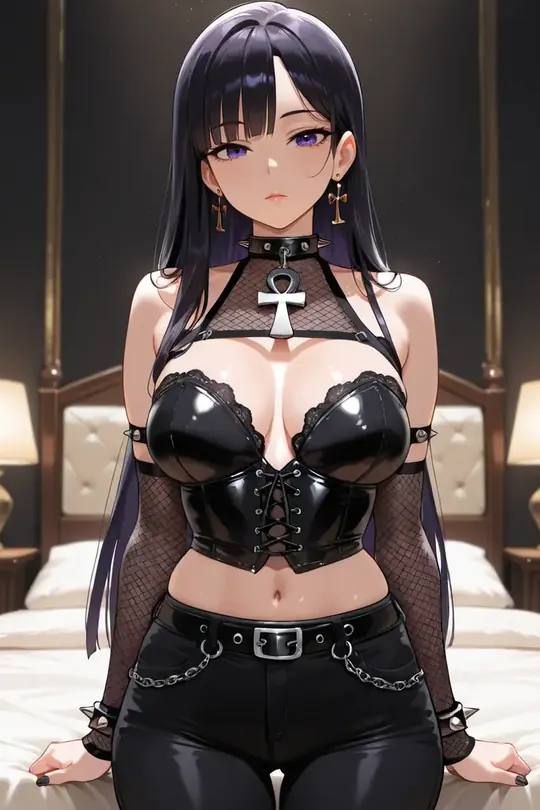
AnimeAnime render, same editor, different art model. 
PhotorealPhotoreal render, built in the character editor. 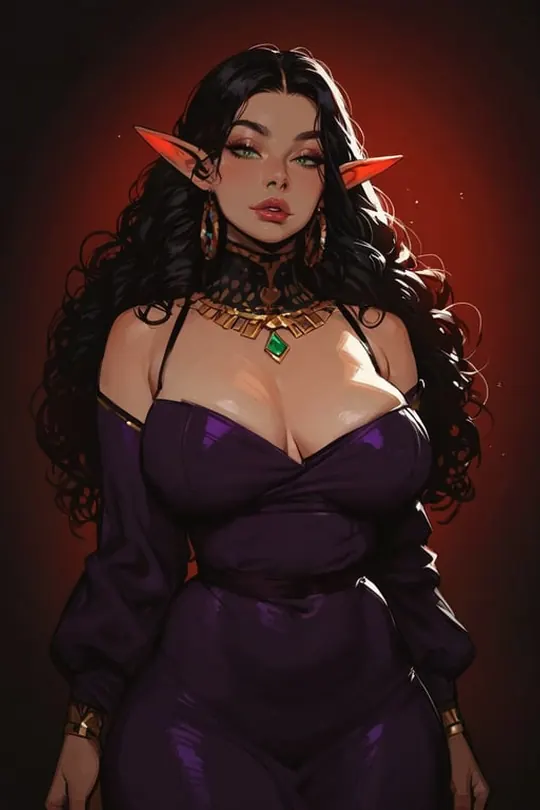
FantasyFantasy render: non-human traits, invented settings. - See the full catalogueHundreds of characters, filtered by style and by gender.

PhotorealPhotoreal render, built in the character editor. 
AnimeAnime render, same editor, different art model. 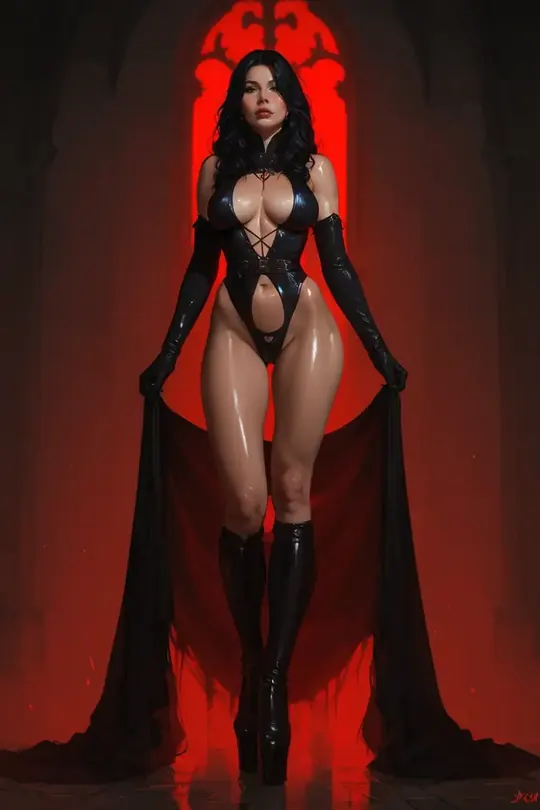
FantasyFantasy render: non-human traits, invented settings.
Images published on the public catalogue of darlink.ai. Every character is generated; none is a real person.
Common questions about how it works
Do I need an account to look around?
No. The public character feed, including scenarios and creator names, is visible without signing in. Chatting and generating media require an account and a paid plan.
How long are the generated videos?
Roughly five to ten seconds per clip, at a cost of 20 tokens. At the base pack rate that is about $2.00 for each clip.
Can I change a character after creating her?
The builder covers appearance, personality, role, occupation and voice, and characters are editable from your account area. What does not transfer is conversation history tied to a different character.
Are voice messages charged per message?
No. Voice is part of the subscription. Your plan determines how many voices you can choose from: six standard voices on Essential, ten premium voices on Advanced and Ultimate.
Getting more out of a first session
- Browse before you build. The public feed shows you what good scenarios look like, and reading a dozen takes five minutes.
- Pick memory before you pick a character. If you want continuity, the plan decides it, not the character. Basic memory restarts each session regardless of how well the character is written.
- Spend coins on images first. At 2 tokens each you get ten times as many as videos, and it tells you far more about the platform's output quality for the same money.
- Use voice early. It is included rather than metered, so it is the one feature you can explore without watching a balance.
- Ignore the countdown. The offer timer resets on each visit. Nothing expires.
One last point on expectations. This is a text model with media generation attached, not a person. It holds a character well within a session and, on the higher tiers, across sessions. It does not understand you. Reviews that describe emotional breakthroughs are describing their own projection, which is a real experience but not a product feature.
Languages and access
The company describes the platform as multilingual and cross-platform across web and mobile. The interface we examined was in English, and the character scenarios in the public feed are written by users in several languages, with English dominant and Spanish visible among them.
If you intend to converse in a language other than English, test it before committing to an annual plan. Model quality across languages varies far more than any marketing page admits, and it is the kind of thing a monthly subscription lets you check cheaply.